
The Future of Software Development in India: Shifts Redefining Mumbai, Bangalore, Noida & Beyond by 2028
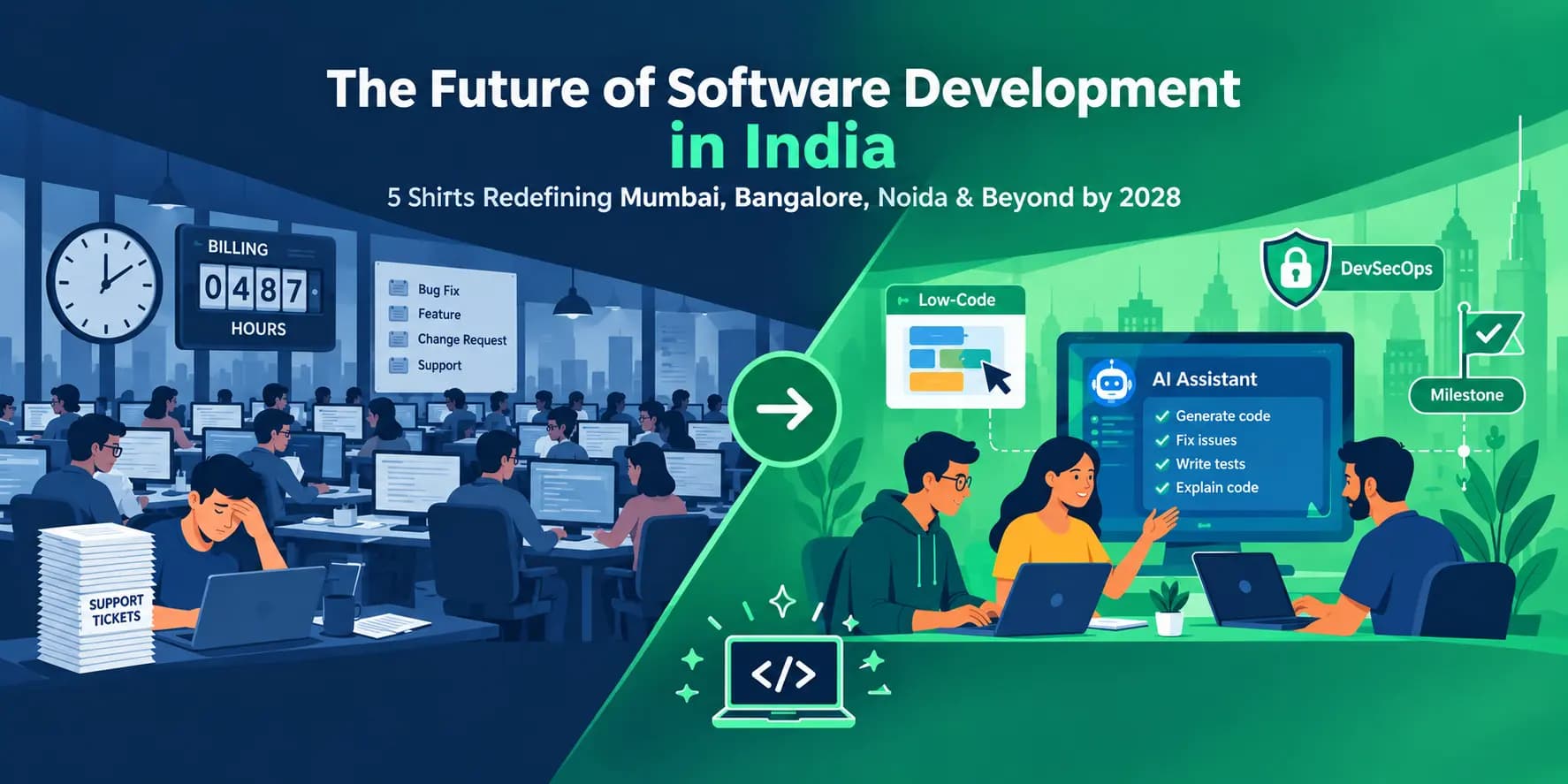
Walk into a mid-sized software agency in India today and you may notice a change almost immediately. There are still plenty of developers, of course, but the old image of a huge floor packed with junior engineers working through repetitive tickets is starting to fade. Smaller teams are getting more done, and they are doing it at a pace that would have seemed unrealistic just a few years ago.
Two forces are driving much of this change: the rapid growth of Global Capability Centers (GCCs) into areas beyond traditional tech roles, and AI tools becoming part of everyday engineering work. Together, they are putting pressure on the old Indian delivery model, where agencies could grow revenue by adding more junior developers to a project and billing for the extra hours.
To understand where software development in India is heading, it helps to look beyond the usual industry hype. Whether you are building in Mumbai, hiring in Noida, or scaling a product from Bangalore, the way software is designed, secured, delivered, and priced is changing in a meaningful way.
Quick answer: The future of software development in India is moving away from simply adding more people and toward getting more output from smaller, AI-augmented teams. By 2028, five shifts are likely to shape the market: AI coding tools taking on routine development work, low-code platforms handling more enterprise workflows, privacy and security becoming part of everyday development, edge computing supporting real-time use cases, and software contracts moving from hourly billing toward milestone-based outcomes.
1. AI-Native Coding: Your Next Dev Team Will Be Half the Size (and Twice as Fast)
AI is not simply replacing software engineers. What is changing faster is the value of different engineering skills. Developers who can prompt, review, test, and orchestrate AI-generated code have an advantage over developers who rely mainly on writing routine syntax themselves.
In modern development teams, tools such as Cursor, GitHub Copilot, and Claude are going well beyond autocomplete. They can help scaffold database schemas, create unit tests, work through repetitive implementation tasks, and turn designs into working React components in a fraction of the usual time. That changes the economics of a project. A team that once needed twelve people for certain workloads may be able to deliver with five or six experienced engineers.
The developer's role is changing along with it. Junior engineers cannot rely on being the person who simply writes syntax anymore because AI can handle much of that work. Their value increasingly comes from reviewing code, understanding edge cases, validating business logic, and catching security or reliability problems that an LLM may miss. For a deeper look at this shift, our breakdown of how intelligent coding is transforming the industry in 2026 goes into more detail.
What this means for your project: Be cautious if a vendor proposes a large team of twenty junior developers for a straightforward web application. A bigger team does not automatically mean better value when much of the work can now be automated. A smaller group of experienced architects and engineers can often make better use of AI tools while still keeping quality and production risks under control. If you want to see the approach in action, building your first AI agent is a practical way to explore what automated workflows can look like.
2. Low-Code Has Left the Sandbox
A few years ago, low-code platforms were often dismissed as tools for simple prototypes. That attitude is changing quickly.
Indian enterprises, particularly in banking, logistics, and insurance, are using low-code for more serious internal workflows. The reason is straightforward: business processes change constantly, and waiting months for a development team to update a basic approval or operations workflow can slow the business down. In regulated sectors such as banking, workflow changes also need to comply with evolving RBI guidelines, making controlled, versioned low-code changes increasingly useful.
This does not mean custom development is going away. It means engineering leaders are becoming more deliberate about where they spend specialist development time.
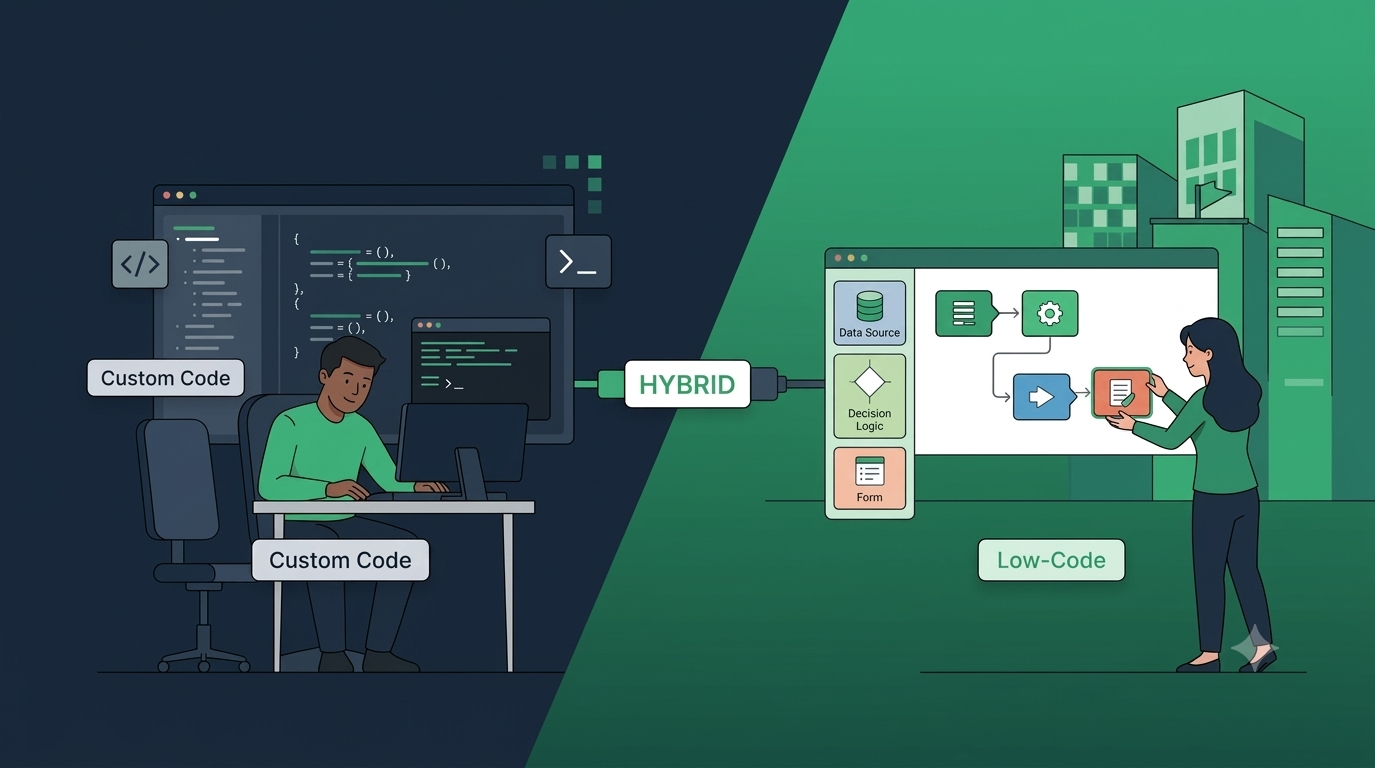
- Use low-code for: internal operational tools, basic admin panels, customer service portals, and launching an MVP before committing to a full build.
- Use custom code for: high-frequency transaction engines, proprietary algorithms, real-time analytics, and core intellectual property.
A practical architecture for many organizations is hybrid. Custom microservices can handle demanding backend logic, while low-code tools can manage front-end workflows and internal processes that business teams need to change regularly.
What this means for your project: Do not spend premium engineering time rebuilding standard admin dashboards when a reliable low-code option can do the job. Put your custom development budget into the parts of the product that create real differentiation, such as complex business logic, performance, or proprietary functionality.
3. DevSecOps Isn't a "Nice-to-Have" Anymore. It's the Law.
For years, security in software projects was often treated as something to check near the end. A team could spend months building an application, schedule a penetration test just before launch, fix the most obvious issues, and move on.
India's Digital Personal Data Protection (DPDP) Act has made that approach much harder to justify.
As organizations face greater consequences for data exposure, security is moving closer to the development process itself. Instead of treating security as a final audit, teams are building it into everyday engineering practices. That is the core idea behind DevSecOps.
Rather than waiting until the end of a project, automated security checks can run with every pull request. They can look for exposed API keys, outdated dependencies, vulnerable patterns, and other common risks before changes reach a staging or production environment.
What this means for your project: If your software handles customer data in India, leaving security until the end can create expensive rework and launch risk. Ask potential vendors how security is built into their CI/CD pipeline and what testing they run throughout development. For higher-risk applications, an independent penetration test before launch can provide an additional layer of assurance.
4. Edge Computing Is Fixing the Latency Trap
Cloud computing solved many storage and scalability problems, but it cannot remove the limits imposed by physical distance and network latency.
Consider an automated factory floor in Pune, delivery vehicles operating across NCR, or a port terminal in Mumbai. Sending large volumes of raw sensor data to a centralized cloud server and waiting for a response can introduce too much delay for applications where every millisecond matters. A slow response can affect production, routing, or even safety systems.
Edge computing addresses this by processing data closer to where it is generated. Local gateway servers, factory hardware, and onboard devices can handle time-sensitive processing and send only the useful summaries or logs back to the central cloud.
That is creating demand for engineers who can work across both software and connected systems. Development teams are increasingly looking for people who understand technologies such as Rust, embedded C, and MQTT alongside conventional web stacks.
What this means for your project: If your product connects to hardware, IoT devices, or real-time logistics systems, make sure your team understands the constraints of edge environments. A web developer accustomed to virtually unlimited cloud resources may approach a low-power device very differently from someone with hands-on edge experience. That is where specialist IoT and edge development expertise can make a real difference.
5. Agency Contracts Are Flipping: Paying for Outcomes, Not Hours
The business model around software development is changing too. The traditional time-and-materials approach is facing more pressure as clients become more focused on what they actually receive at the end of a project.
In the past, an agency might quote ten developers for six months. Under a purely hourly model, taking longer could mean more billable work. AI changes that equation because experienced engineers can now complete many tasks much faster.
As a result, more contracts are moving toward outcome-based milestones. Instead of paying for 160 hours of development time, a client may pay for a working, load-tested payment integration or an AI search feature that meets an agreed accuracy target.
This pushes agencies to stay lean, use modern engineering tools, and focus on shipping useful software. How the outsourcing model itself is being rewritten explores how this shift is changing the way companies work with development teams in India.
What this means for your project: When possible, structure engagements around clear deliverables and milestone-based pricing. This makes expectations easier to manage and puts more focus on working software rather than hours logged. If a vendor is unwilling to connect payment to measurable deliverables, ask why.
2024 vs. 2028: The Real Differences
What You Saw in 2024 | What You'll See by 2028 |
|---|---|
Large teams manually typing syntax | Small teams managing AI coding tools |
Custom builds for simple admin apps | Hybrid builds (Low-code UI + Custom API) |
Security audits done right before launch | Automated security bots checking every code push |
Everything sent straight to central cloud | Local edge processing for real-time hardware |
Hourly billing and headcount bloat | Milestone pricing based on working software |
City-by-City Forecast: The Future Looks Different Depending on Where You Build
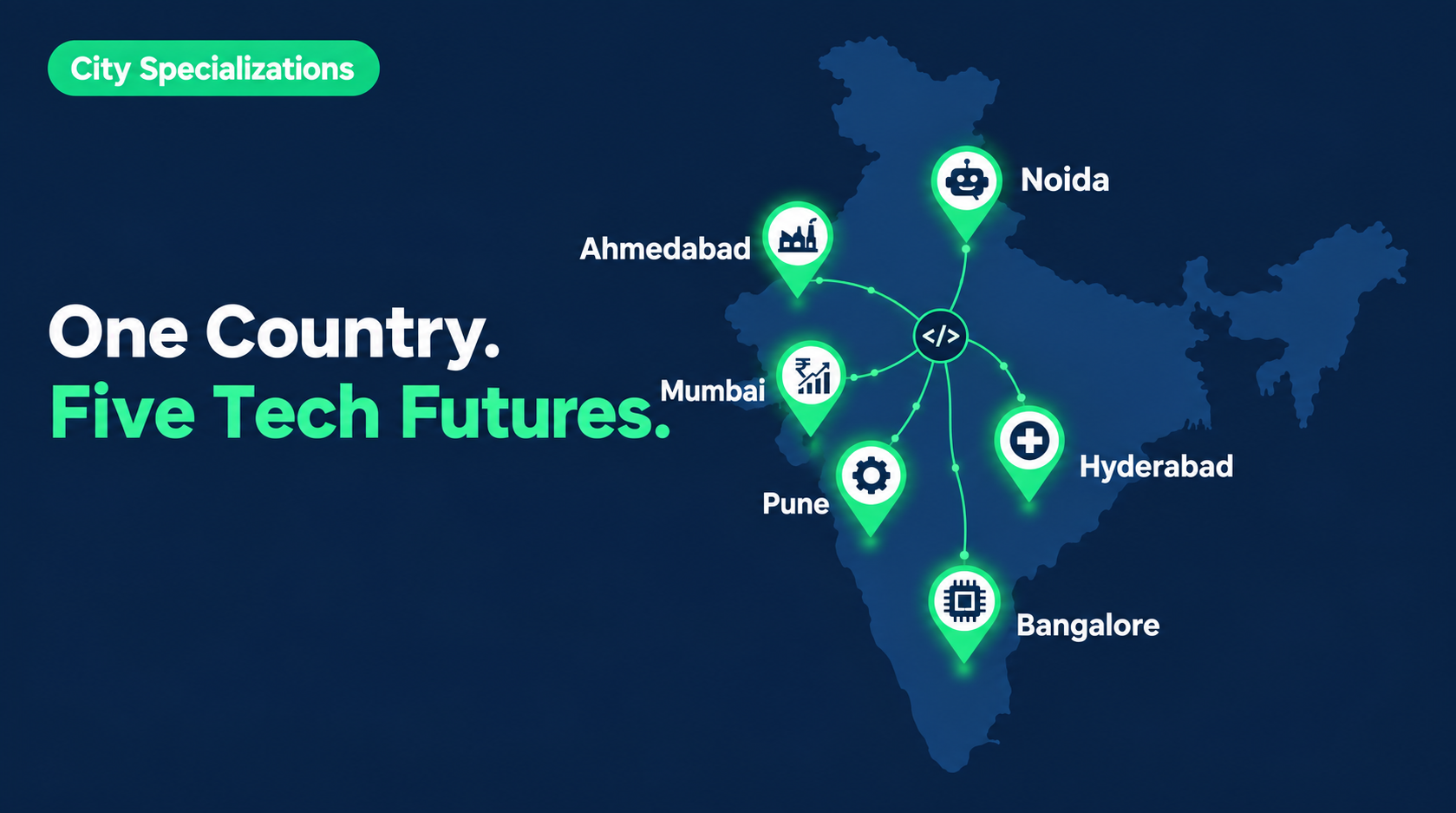
India is not one single software market, and the differences between cities matter. Mumbai is strengthening its position in AI and fintech, with a growing media-tech crossover in areas such as Andheri. Software development is already reshaping how Mumbai businesses grow, while Mumbai's highest-rated development teams are increasingly organizing around these opportunities. Bangalore continues to be a major center for deep tech and product engineering. Hyderabad is bringing its pharmaceutical strengths into healthtech and AI. Noida is becoming an attractive hub for e-commerce, enterprise software, and AI agent development, with the dev shops leading this shift in Noida increasingly competing on AI capability rather than price. Pune is building a strong position in automotive software and Industry 4.0. If you are comparing NCR locations, our Noida vs Gurugram breakdown looks at the cost and talent trade-offs. The broader point is simple: choosing the right city can matter almost as much as choosing the right development partner.
How We Handle This at Toadster
We do not see these changes as something that will happen years from now. They are already shaping how we work at Toadster Technologies. Our teams across Noida and Delhi NCR, along with project work in Mumbai and Bangalore, use AI-assisted workflows, automated DevSecOps practices, and hybrid architectures as part of our delivery approach.
We are not focused on selling oversized development teams or charging for manual work that software can automate. Whether you need an enterprise AI development engagement, a focused custom platform, or an MVP that can grow with the business, our focus is on delivering working software that supports measurable business goals.
The software companies that do well over the next five years are unlikely to be the ones simply boasting about headcount. The stronger teams will be the ones that combine experienced engineers, practical AI adoption, strong security practices, and a clear focus on delivering useful software.